
Author name: admin

A university graduation ceremony where a graduate in cap and gown receives her PhD certificate from an academic official in formal regalia.

Celebrating Dr Stefani Knijnik: A PhD Strengthening Feeding Practice Across the Lifespan

In May, our team celebrated a milestone that reflects everything Thrive Feeding Clinic stands for: evidence‑based practice, clinical depth, and genuine care for families. On that day, Dr Stefani Knijnik officially graduated with her PhD from the University of Sydney — a culmination of years of research, clinical practice, learning, challenge and growth. Stef’s work

Celebrating Dr Stefani Knijnik: A PhD Strengthening Feeding Practice Across the Lifespan Read Post »

Adults & Ageing Clinic Guides & Assessments Infant Feeding Swallowing & Dysphagia Thrive Updates, , , , ,

A colourful shared meal with a variety of foods on a table, showing different textures and mealtime interactions, used to represent feeding, mealtime routines and food diversity.

Thrive Feeding Clinic: Specialist Feeding & Swallowing Support Across the Lifespan in Newcastle & the Hunter

Feeding and swallowing are among the most complex human behaviours. They rely on coordinated motor skills, sensory processing, respiratory control, emotional regulation and medical stability. When any part of this system becomes disrupted, feeding can quickly become stressful, unsafe or overwhelming — for infants, children, adults and older adults alike. Thrive Feeding Clinic was created

Thrive Feeding Clinic: Specialist Feeding & Swallowing Support Across the Lifespan in Newcastle & the Hunter Read Post »

Adults & Ageing Feeding & Mealtimes Infant Feeding NDIS & Support Teams Swallowing & Dysphagia Thrive Updates, , , , , ,
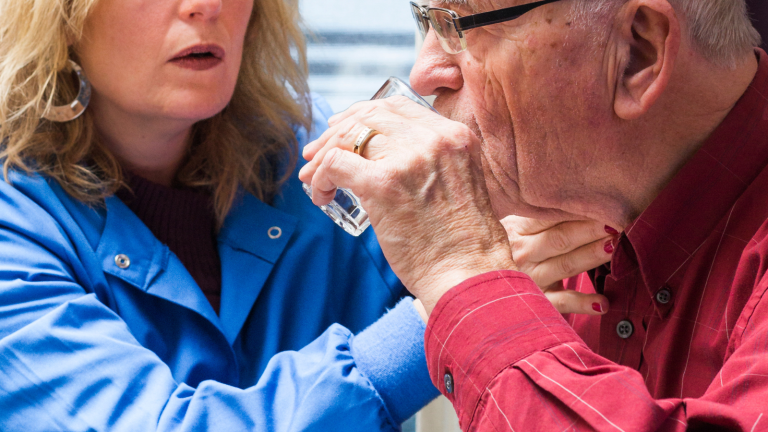
Clinician supporting an older adult during safe drinking, demonstrating hands‑on assistance used in swallowing (dysphagia) assessments.

What a Swallowing (Dysphagia) Assessment Actually Involves

For adults, older adults and carers Swallowing difficulties can appear gradually or suddenly — after illness, with ageing, or alongside neurological conditions. A swallowing assessment helps identify what’s happening and how to keep eating and drinking safe. Here’s what to expect. 1. A conversation about your concerns We start by discussing: This helps us understand

What a Swallowing (Dysphagia) Assessment Actually Involves Read Post »

Adults & Ageing Clinic Guides & Assessments Swallowing & Dysphagia, , , , , ,
Parent and clinician supporting a baby during a calm, guided breastfeeding session, demonstrating infant feeding assessment and positioning.

Signs Your Baby May Benefit From a Feeding Assessment

What’s normal, what’s not, and when to seek support Feeding a baby can feel surprisingly complex. Between latch, bottles, positioning, settling and early solids, it’s easy to wonder what’s typical and what needs support. Here are some signs your baby may benefit from a feeding assessment. 1. Feeding feels consistently stressful If feeding feels like

Signs Your Baby May Benefit From a Feeding Assessment Read Post »

Clinic Guides & Assessments Infant Feeding, , , , , , , ,
Children and adults sharing a relaxed meal outdoors, modelling low‑pressure, positive mealtime interaction.

Why Feeding Therapy Isn’t About “Getting Kids to Eat”…

… and what actually helps children feel safe and confident at mealtimes When families first come to us, they often say the same thing: “We just want them to eat.” It makes sense — eating feels like the goal. But in feeding therapy, eating is actually the outcome, not the starting point. Children eat well

Why Feeding Therapy Isn’t About “Getting Kids to Eat”… Read Post »

Feeding & Mealtimes Parent Coaching & Behaviour, , , , , , , , ,
Scroll to Top