
Feeding & Swallowing Support for Older Adults
Feeding & swallowing support for older adults with dysphagia, disability‑related feeding needs or other mealtime challenges in Newcastle & the Hunter Region
As we age, changes in swallowing, oral‑motor function, cognition, mobility and health conditions can make eating and drinking more difficult. THRIVE provides specialist swallowing (dysphagia) and feeding assessment for older adults across Newcastle, Lake Macquarie and the Hunter Region.
Our Speech Pathologists specialise in dysphagia assessment, mealtime safety and practical recommendations for older adults experiencing age‑related changes, neurological conditions, disability, dementia or unexplained swallowing difficulties. Our multidisciplinary team also supports older adults with sensory‑based feeding challenges, mealtime anxiety, eating‑related behavioural responses and participation difficulties.
What we support
Swallowing (Dysphagia)

Who we support
We support older adults with feeding, swallowing and mealtime participation needs, including people living with:
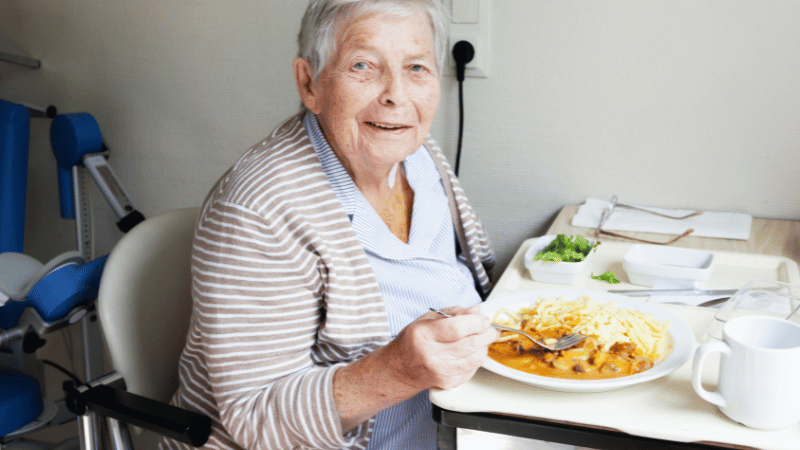
We support older adults who live in home care, community settings, aged‑care facilities, supported independent living, day programs and NDIS environments.
Our approach
Feeding and swallowing support for older adults at THRIVE is Speech‑Pathology‑led, with Occupational Therapy, Psychology and Behaviour Support involved when sensory, emotional or behavioural factors are contributing.
Our goal is to provide practical, evidence‑based recommendations that improve safety, comfort and quality of life.
We explore:

Signs an older adult may benefit from a swallowing or feeding assessment

What to expect

Comprehensive swallowing assessment
A detailed assessment exploring swallowing safety, oral‑motor function, mealtime behaviours and medical history.

Dysphagia management plan
Clear recommendations for textures, pacing, positioning and mealtime safety.

Feeding & mealtime support
Strategies for sensory needs, participation, independence and comfort.

Carer & staff training
Practical training to support safe, consistent mealtime care across environments.

Multidisciplinary input
OT, Psychology and Behaviour Support involvement when sensory, emotional or behavioural factors are contributing.
Telehealth for older adults
Some aspects of feeding therapy — such as strategy sessions and carer training — can be delivered via telehealth. However, swallowing assessments cannot be completed via telehealth for safety reasons and must be done in person.

Ready to book a swallowing or feeding assessment?
We provide safe, evidence‑based support for older adults across Newcastle and the Hunter Region.
Frequently Asked Questions
Yes — we support adults with a wide range of disabilities and support needs.
Yes — we support feeding and swallowing needs associated with dementia and cognitive decline.
Yes — we provide swallowing assessments, mealtime recommendations and staff training.
Yes — we work alongside GPs, specialists and allied health providers.
No. You can contact us directly to arrange an appointment. Referrals from GPs or other health professionals are welcome but not required.
You’ll receive clear information about the findings, along with practical strategies and recommendations tailored to your goals and routines. If further support or collaboration with other health professionals is helpful, we will discuss this with you.
We are based in Newcastle, NSW, and support families across the Hunter region and Central Coast, including Lake Macquarie, Maitland, and Port Stephens.
Yes — we support self‑managed, plan‑managed and NDIA‑managed participants.
Yes — we are able to take bookings for Flexible Endoscopic Assessments (FEA) from August.